
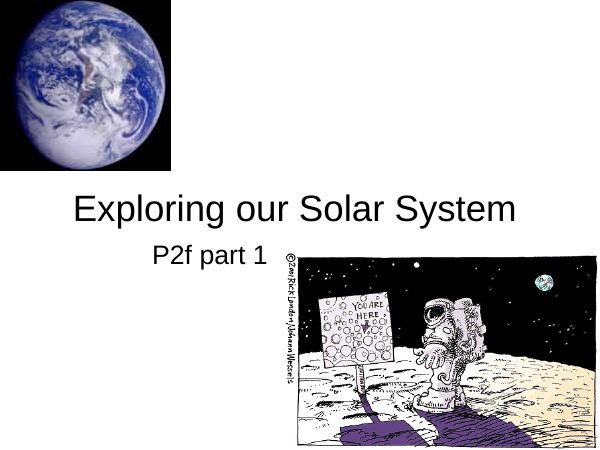
A GCSE physics lesson with clear objectives and Foundation and Higher outcomes. Students learn about the bodies that make up the Universe (stars, planets, comets, meteors, black holes and galaxies), why planets and moons stay in their orbits, and the order of the planets, finishing with a Solar System model activity. Part 1 of 2.
What this presentation covers
- What the Universe contains
- why planets and moons stay in orbit
- the planets of the Solar System
- making a model of the Solar System
Level: GCSE (Foundation and Higher)
Slides: 24
Format: PowerPoint (.ppt)
Teaching notes
How to use it. Written for GCSE Physics with Foundation and Higher outcomes, so it suits mixed ability groups. Use the opening slides as a card sort, asking pupils to arrange the bodies in the Universe from smallest to largest before you reveal the answers. The Solar System model activity at the end works well in pairs, and Part 2 continues the topic.
Key words
- Universe: everything that exists, including all the galaxies
- Galaxy: a huge group of billions of stars held together by gravity
- Star: a ball of hot gas that gives out its own light
- Comet: a ball of ice and dust that orbits the Sun on a long, stretched path
- Black hole: a region where gravity is so strong that not even light can escape
Quick check questions
- What keeps the Moon in orbit around Earth?
- What is the difference between a star and a planet?
- Put these in order of size, smallest first: galaxy, planet, Universe, Solar System.
Show answers
- Earth’s gravity.
- A star gives out its own light; a planet only reflects light from a star.
- Planet, Solar System, galaxy, Universe.
Related lessons: Exploring our Solar System Part 2 | Planets and Orbits | Solar System Objects to Scale