
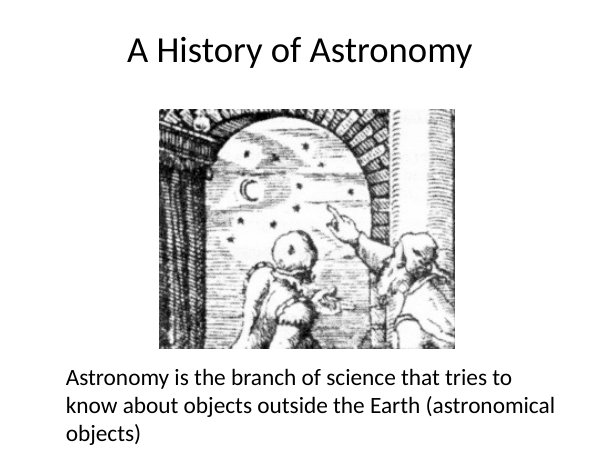
A short introduction to the history of astronomy. It starts with what astronomy is, looks at observations made by ancient peoples in China, India and elsewhere and how they were used to make calendars, then explains the shift from a geocentric (Earth centred) to a heliocentric (Sun centred) model of the Solar System.
What this presentation covers
- Ancient astronomy
- calendars
- geocentric and heliocentric models
- key astronomers
Level: KS3 / GCSE
Slides: 10
Format: PowerPoint (.pptx)
Teaching notes
How to use it. A short lesson for KS3 or GCSE Physics, and it links well with the history curriculum too. It works as an introduction to space or as a lesson on how scientific ideas change over time. Ask pupils why the geocentric model seemed obvious to people watching the sky, then why the evidence eventually changed minds.
Key words
- Astronomy: the scientific study of space and the objects in it
- Geocentric model: the old idea that Earth is at the centre and everything orbits it
- Heliocentric model: the idea that the Sun is at the centre and the planets orbit it
- Copernicus: the astronomer who proposed the heliocentric model in 1543
- Galileo: the astronomer whose telescope observations supported the heliocentric model
Quick check questions
- What is the difference between the geocentric and heliocentric models?
- Why did ancient peoples study the sky?
- What did Galileo see that supported the heliocentric model?
Show answers
- Geocentric puts Earth at the centre; heliocentric puts the Sun at the centre.
- To make calendars, track the seasons for farming, navigate and for religious reasons.
- Moons orbiting Jupiter, and the phases of Venus.
Related lessons: The Space Race | Planets and Orbits | The Universe and the Big Bang