
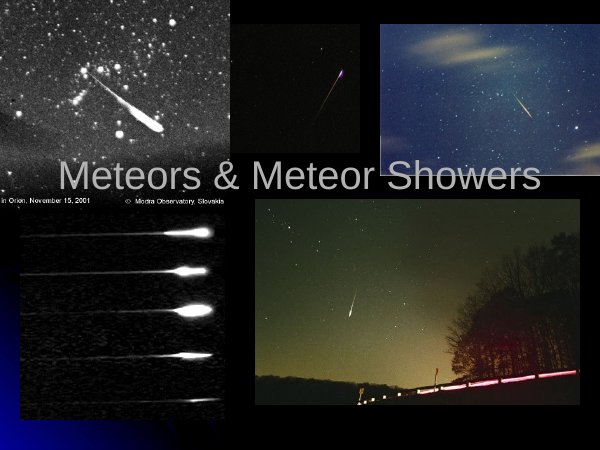
A clear introduction to meteors. It explains the difference between a meteoroid, a meteor and a meteorite, where meteors come from, how fast they travel through the atmosphere, how many you might see on a clear night, and what causes a meteor shower.
What this presentation covers
- Meteoroid, meteor and meteorite compared
- where meteors come from
- how fast they travel
- meteor showers
Level: KS2 / KS3
Slides: 13
Format: PowerPoint (.ppt)
Teaching notes
How to use it. This works well as a 20 to 30 minute introduction to meteors for KS2 Earth and space or KS3 space science. Start with the three key words, because pupils often use them interchangeably, then use the slides on speed and meteor showers to explain what pupils might actually see. It is a perfect lead in to a night time observation: the Perseids peak in mid August and the Geminids in mid December.
Key words
- Meteoroid: a small piece of rock or dust travelling through space
- Meteor: the streak of light seen when a meteoroid burns up in the atmosphere
- Meteorite: a piece that survives the journey and lands on Earth
- Meteor shower: many meteors seen over a few nights as Earth passes through a trail of comet dust
- Radiant: the point in the sky that the meteors in a shower seem to come from
Quick check questions
- What is the difference between a meteor and a meteorite?
- Why do meteor showers happen at the same time each year?
- Why does a meteor glow?
Show answers
- A meteor is the streak of light in the sky; a meteorite is a piece that reaches the ground.
- Earth passes through the same trail of dust left by a comet at the same point in its orbit.
- It hits the atmosphere so fast that the air in front of it heats up and the meteoroid burns up.
Related lessons: Asteroids and Comets | The Solar System: Planets and Orbits | The Moon