
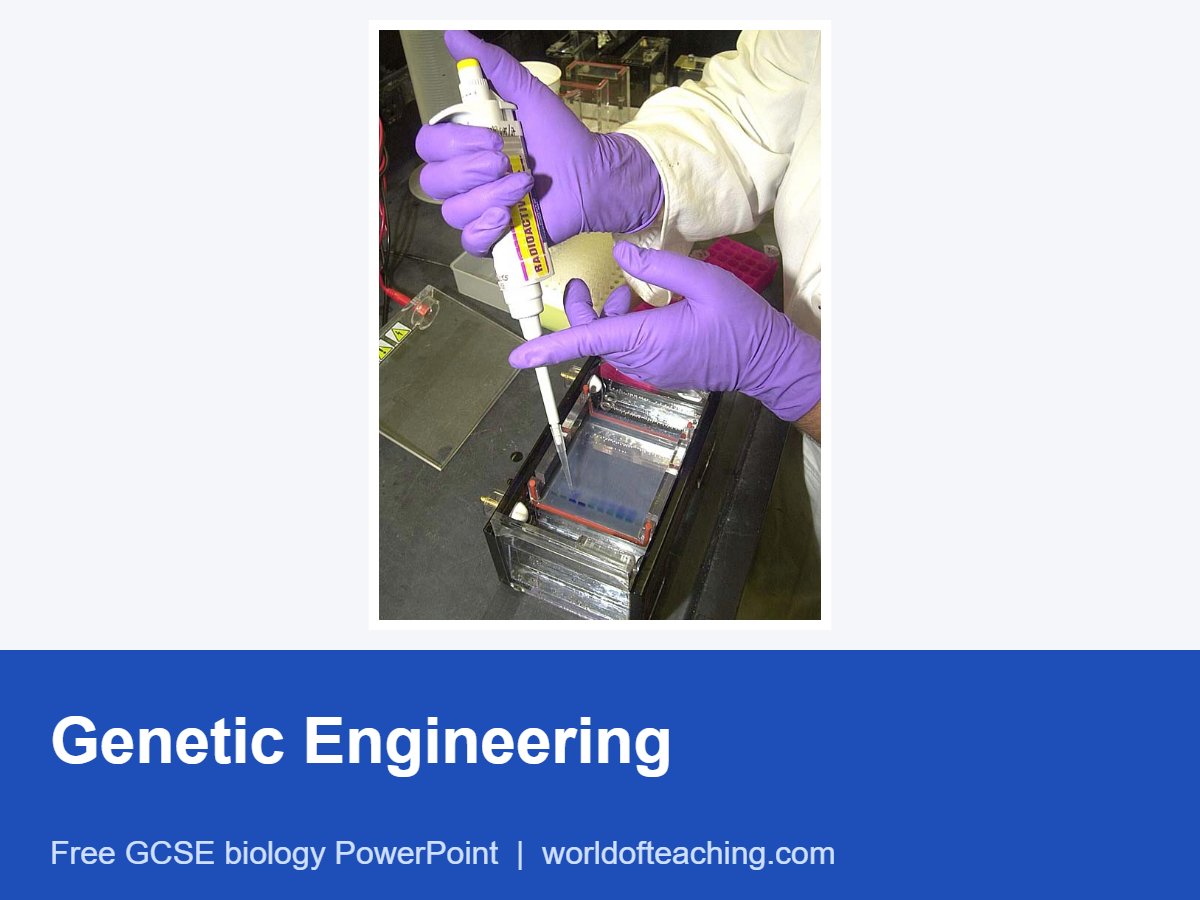
A broad introduction to genetic engineering. It starts with selective breeding, explains recombinant DNA and how bacteria are engineered to make human insulin, then covers genetically modified plants, transgenic animals, PCR and gel electrophoresis, with a discussion question on GM food.
What this presentation covers
- selective breeding
- recombinant DNA, plasmids and restriction enzymes
- bacteria making insulin and growth hormone
- genetically modified crops
- transgenic animals, including a goat carrying a human gene
- the GM food debate
- PCR and gel electrophoresis for DNA identification
Level: GCSE
Slides: 17
Format: PowerPoint (.pptx)
Teaching notes
How to use it. Fits GCSE Biology (Inheritance, variation and evolution in AQA). Start with selective breeding, which most pupils already understand, then show how genetic engineering does the same job faster and more precisely. The GM food discussion question works well as a structured debate, with pupils arguing for and against before writing a balanced conclusion.
Key words
- Genetic engineering: changing an organism’s genes, often by adding a gene from another species
- Plasmid: a small ring of DNA in bacteria, used to carry new genes
- Restriction enzyme: an enzyme that cuts DNA at a particular sequence
- Recombinant DNA: DNA made by joining DNA from two different sources
- GM crop: a crop plant whose genes have been changed, for example to resist pests
Quick check questions
- Which enzyme is used to cut a gene out of DNA?
- Why are bacteria used to make human insulin?
- Give one argument for and one against GM crops.
Show answers
- A restriction enzyme.
- They reproduce very quickly and their plasmids are easy to modify, so large amounts of insulin can be made.
- For: higher yields or pest resistance. Against: possible effects on wild plants and insects, or concerns about long term safety.
Related lessons: PCR | DNA Structure | Natural Selection and Evolution