
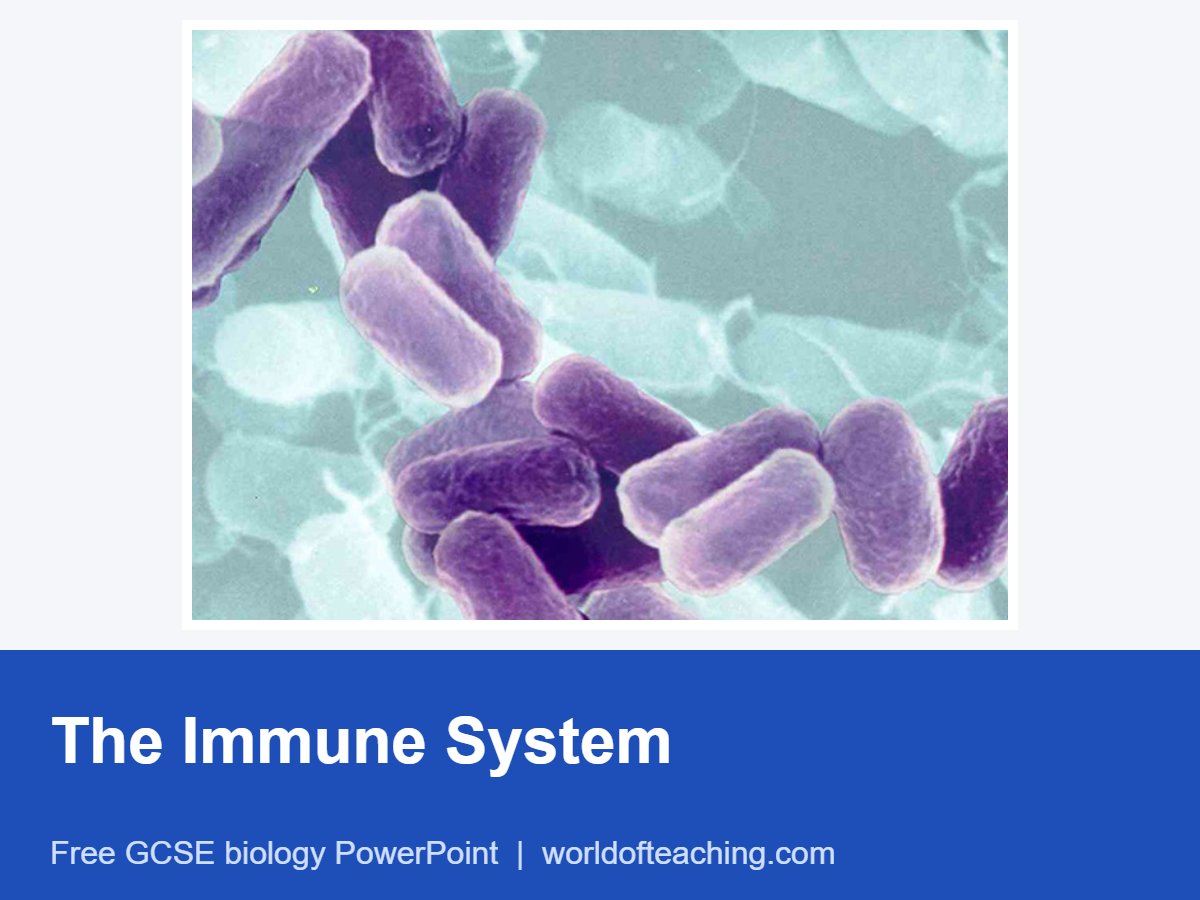
A lesson on how the body defends itself against disease. It covers the first lines of defence, pathogens, phagocytosis step by step, lymphocytes, antigens and antibodies, and finishes with immunity and memory cells.
What this presentation covers
- first lines of defence: skin, tears and saliva
- types of pathogen
- phagocytes and the stages of phagocytosis
- pus
- lymphocytes and the specific response
- antigens and antibodies
- natural and acquired immunity
- immunological memory
Level: GCSE
Slides: 18
Format: PowerPoint (.pptx)
Teaching notes
How to use it. This lesson fits GCSE Biology (Infection and response in AQA). Phagocytosis is easiest to remember as a short sequence, so ask pupils to draw it as a four box comic strip. A graph of antibody levels after a first and second infection is a good way to check they understand memory cells and why vaccines work.
Key words
- Pathogen: a microorganism that causes disease: a bacterium, virus, fungus or protist
- Phagocyte: a white blood cell that engulfs and digests pathogens
- Lymphocyte: a white blood cell that makes antibodies
- Antigen: a molecule on the surface of a pathogen that the immune system recognises
- Memory cell: a lymphocyte that stays in the blood and responds quickly to a second infection
Common misconception: “Antibiotics kill viruses.” Antibiotics only work against bacteria. Viruses live inside our own cells, so the body’s immune system, sometimes helped by a vaccine, has to deal with them.
Quick check questions
- Name two first lines of defence against pathogens.
- What do lymphocytes produce?
- Why are you unlikely to catch the same disease twice?
Show answers
- Any two of: skin, tears, saliva, stomach acid, mucus and cilia in the airways.
- Antibodies, which match a specific antigen.
- Memory cells recognise the antigen and make antibodies quickly, before you feel ill.
Related lessons: Blood | Viruses and Bacteria | Penicillin
New free lessons every week.Follow World of Teaching on Facebook so you never miss one.Follow on Facebook