
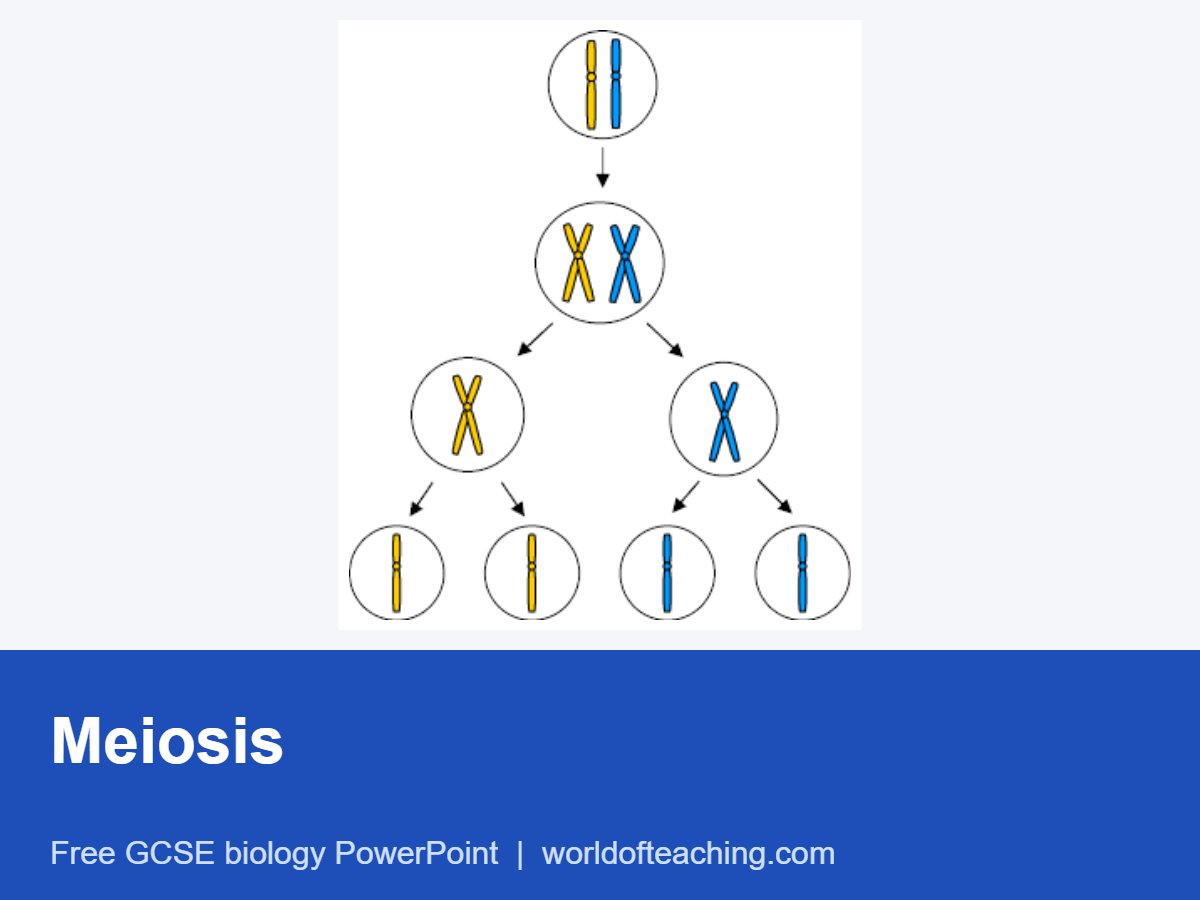
A concise lesson on meiosis as reduction division. It explains why gametes need half the number of chromosomes, shows the two divisions using mouse testes as an example, and then looks at what happens when division goes wrong, using Down’s syndrome as a case study.
What this presentation covers
- why meiosis is needed
- production of gametes
- the first and second divisions
- meiosis in mouse testes
- division errors and non disjunction
- trisomy 21 (Down’s syndrome)
Level: GCSE
Slides: 9
Format: PowerPoint (.pptx)
Teaching notes
How to use it. A short GCSE lesson that pairs naturally with the mitosis lesson. Comparing the two in a table (number of divisions, cells made, chromosome number, genetically identical or not) is the most useful follow up task, and it comes up regularly in exams.
Key words
- Gamete: a sex cell: a sperm or an egg
- Haploid: having one set of chromosomes (23 in humans)
- Diploid: having two sets of chromosomes (46 in humans)
- Fertilisation: the joining of two gametes to restore the diploid number
- Non disjunction: when chromosomes fail to separate properly during meiosis
Common misconception: “Meiosis is one division that makes two identical cells.” Meiosis has two divisions and makes four cells, each genetically different from the others and from the parent cell.
Quick check questions
- How many chromosomes are in a human sperm cell?
- How many cells does meiosis produce from one cell?
- What is trisomy 21?
Show answers
- 23.
- Four, all genetically different.
- Having three copies of chromosome 21, which causes Down’s syndrome; it can result from non disjunction.
Related lessons: Mitosis | Genetic Crosses | Gregor Mendel
New free lessons every week.Follow World of Teaching on Facebook so you never miss one.Follow on Facebook