
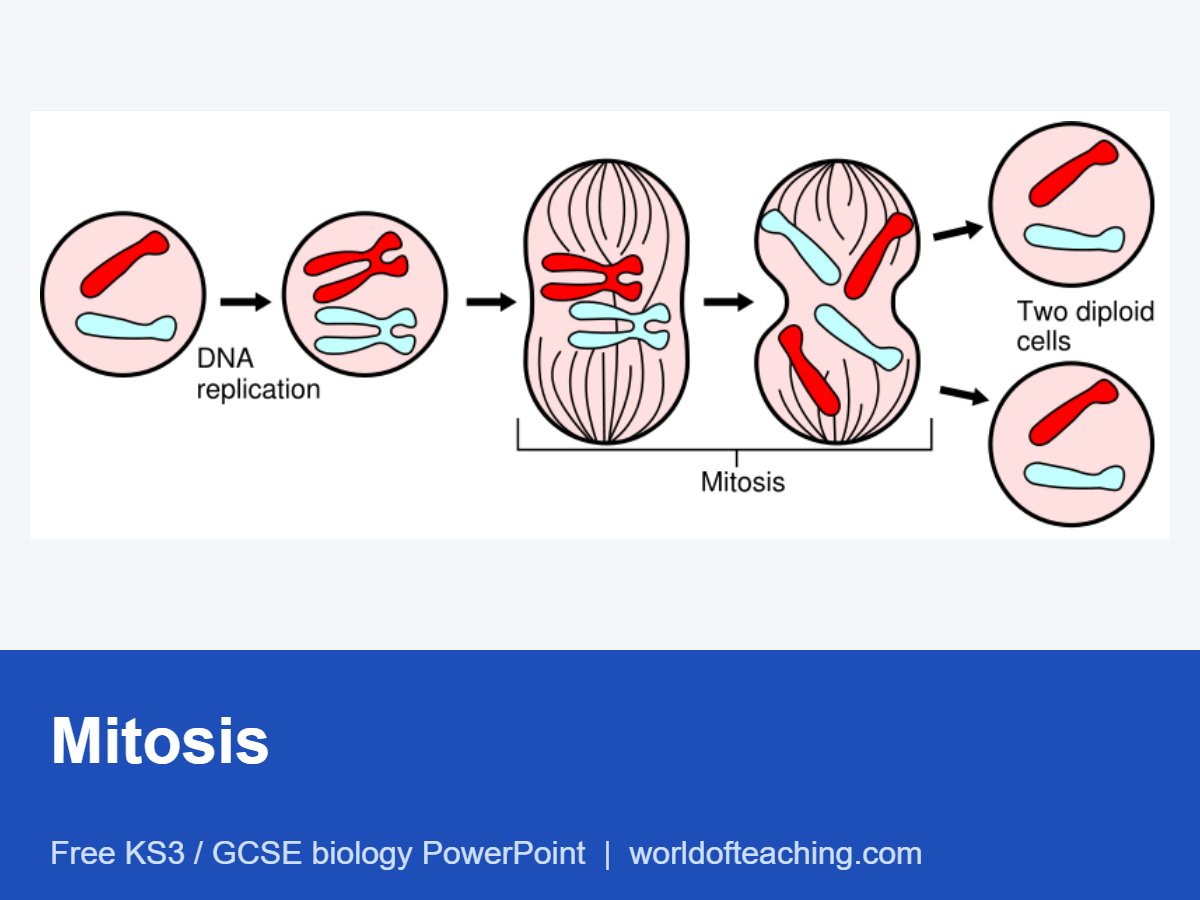
A step by step lesson on the stages of mitosis with a do now starter and key vocabulary. It works through interphase, prophase, metaphase, anaphase, telophase and cytokinesis with diagrams, gives the IPMAT memory aid, and explains how cell division differs in plant cells.
What this presentation covers
- key vocabulary: cell division and chromosomes
- interphase
- prophase, metaphase, anaphase and telophase
- cytokinesis
- the IPMAT memory aid
- mitosis in plant cells and the cell plate
- why mitosis produces identical cells
Level: KS3 / GCSE
Slides: 23
Format: PowerPoint (.pptx)
Teaching notes
How to use it. This lesson suits KS4 Biology (Cell biology in AQA GCSE) and the IPMAT memory aid makes the stages stick. Root tip squashes from onion or garlic are the classic practical: pupils can find cells at different stages under the microscope and estimate how long each stage lasts.
Key words
- Chromosome: a long, coiled molecule of DNA carrying many genes
- Chromatid: one of the two identical copies of a chromosome after DNA replication
- Spindle: fibres that pull the chromatids apart
- Cytokinesis: the final split of the cytoplasm into two cells
- Cell cycle: the series of stages a cell goes through as it grows and divides
Common misconception: “Interphase is a resting stage.” Interphase is the busiest part of the cell cycle: the cell grows, copies its organelles and replicates its DNA ready for division.
Quick check questions
- A body cell with 46 chromosomes divides by mitosis. How many chromosomes are in each new cell?
- What happens during anaphase?
- Give two reasons why organisms need mitosis.
Show answers
- 46. Mitosis produces two genetically identical cells.
- Spindle fibres pull the sister chromatids to opposite ends of the cell.
- Any two of: growth, repair of damaged tissue, replacing cells, asexual reproduction.
Related lessons: Meiosis | Cell Division and Stem Cells revision (premium) | DNA Structure
New free lessons every week.Follow World of Teaching on Facebook so you never miss one.Follow on Facebook